How to Inspect Drywall Finish (Before You Paint)
A drywall finish can look flawless at first glance—until the lights go on, the sun hits the wall, or paint starts revealing imperfections. Whether you’re a property owner or construction professional, knowing how to properly inspect new drywall before painting can save thousands in rework and protect your project schedule.
Garichel Sosa
2/24/20261 min read
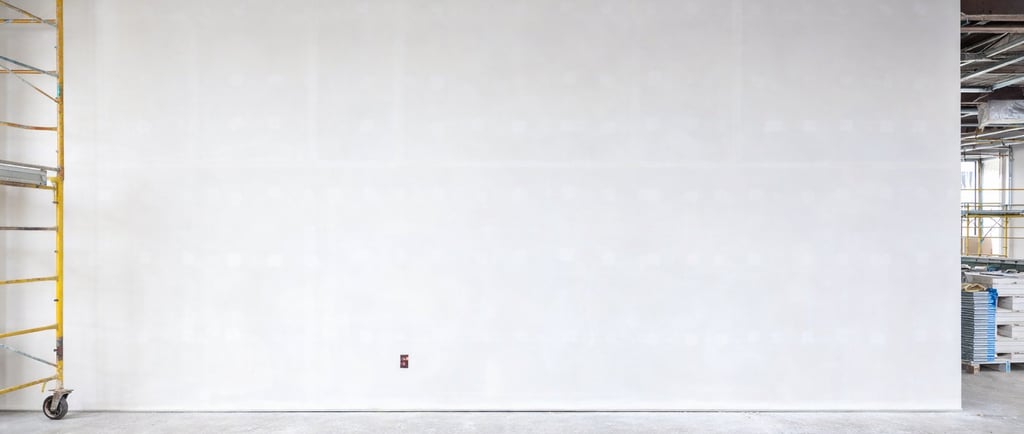
1. Understand the Drywall Finish Level - Before inspecting anything, confirm what finish level was specified in the contract or scope of work.
Level 3 – Utility spaces, garages, heavy texture
Level 4 – Standard residential and commercial walls
Level 5 – High-end residential, offices, or areas with strong lighting
Most interior spaces should be Level 4 at minimum. High-end or well-lit spaces should be Level 5. You should not be able to locate joints on Level 5 walls.
2. Inspect Under Proper Lighting - Drywall defects hide in poor lighting. Turn on permanent overhead lights, or use a handheld LED or work light. Shine light at a low angle (raking light) across the wall.
3. Check All Joints and Seams - Walk every wall and ceiling and visually track each seam. Look for:
Raised or sunken joints
Visible tape lines
Cracks or bubbles
Inconsistent feathering
4. Inspect Corners and Angles Closely - Corners are where rushed drywall work shows first. Check:
Inside corners for straightness and smooth mud transitions
Outside corners for dents, waves, or exposed metal
Ceiling-to-wall transitions for cracking or shadow lines
5. Look for Fastener Issues (Nail Pops & Screw Dimples) - Fasteners should be fully seated, slightly dimpled, and completely concealed with compound. Red flags include raised screw heads and cracks radiating from fasteners.
6. Check Flatness, Not Just Smoothness - A wall can be smooth and still be wrong. Stand back and look down the wall lengthwise. Look for:
Waves
Humps
Depressions
Shadow lines from uneven framing correction
This matters most in long corridors, large living area, offices with linear lighting, walls receiving semi-gloss or satin paint.
Contact
2727 Paces Ferry Road SE Suite 750 Atlanta, GA 30339
678-827-5557
© 2026 Vanguard Construction Company LLC. All rights reserved.
Follow Us